

Most American and European luxury travelers are surprised to learn that Morocco’s Atlantic coastline spans over 3,500 kilometers, making it a standout destination for those seeking exclusive coastal adventures and rich cultural experiences. This region’s allure goes far beyond picturesque beaches, blending ancient heritage with breathtaking ecological diversity. Discerning guests discover world-class accommodations, sophisticated cuisine, and immersive traditions that redefine what it means to explore a truly unique shoreline.
Table of Contents
- Coastal Morocco’s Unique Allure Explained
- Moroccan Beach Towns and Their Distinct Personalities
- Cultural Heritage and Seaside Traditions Unveiled
- Luxury Stays, Wellness, and Boutique Hotels on the Coast
- Fresh Seafood, Dining, and Culinary Experiences
- Water Sports, Excursions, and Planning Tips
Key Takeaways
| Point | Details |
|---|---|
| Unique Coastal Experience | Morocco’s coast offers a rich blend of natural beauty, cultural heritage, and sustainable tourism that appeals to discerning travelers. |
| Diverse Beach Towns | Each beach town, such as Agadir and Essaouira, presents distinct experiences ranging from luxury resorts to cultural immersion. |
| Culinary Delights | Fresh seafood plays a central role in Moroccan coastal cuisine, highlighting the connection between local communities and their maritime heritage. |
| Adventure Activities | The coastline is a hub for various water sports, providing opportunities for both beginners and experienced enthusiasts to engage with the ocean. |
Coastal Morocco’s Unique Allure Explained
Morocco’s coastal landscapes represent a breathtaking fusion of natural beauty, cultural richness, and ecological diversity. The Atlantic coastline, stretching over 3,500 kilometers, offers travelers an extraordinary blend of experiences that transcend typical beach destinations. From the vibrant port cities to the serene sandy beaches, this region embodies a complex narrative of environmental wonder and human interaction.
The coastal zones of Morocco, particularly the Tangier-Tetouan-Al Hoceima region, showcase an intricate balance between natural ecosystems and human development. These areas are not merely scenic landscapes but dynamic environments where ecological preservation meets socioeconomic transformation. Sandy beaches, expansive dune fields, and rich marine habitats create a mosaic of environmental experiences that attract discerning travelers seeking more than standard tourist destinations.
Beyond physical beauty, Morocco’s coastline represents a profound cultural crossroads. Mediterranean and Atlantic influences converge here, creating unique architectural styles, culinary traditions, and social interactions. Cities like Tangier and Essaouira exemplify this multicultural heritage, where Berber, Arab, European, and African influences have historically intersected. Sustainable tourism emerges as a critical theme, with local communities increasingly recognizing the importance of preserving their extraordinary coastal environments while developing responsible economic opportunities.
Pro tip: When exploring Morocco’s coastal regions, engage with local communities and choose eco-friendly accommodations to support sustainable development and gain deeper cultural insights.
Moroccan Beach Towns and Their Distinct Personalities
Morocco’s coastal landscape is a vibrant tapestry of unique beach towns, each offering travelers distinctly different experiences that go far beyond traditional seaside destinations. Coastal tourism profiles reveal a rich diversity of environments ranging from bustling resort towns to serene cultural havens, showcasing the country’s remarkable coastal variety.
Agadir stands out as a premier beach destination, representing modern Moroccan tourism with its well-developed infrastructure and international appeal. Known for its wide sandy beaches and year-round pleasant climate, the city attracts sun-seekers and water sports enthusiasts. In stark contrast, Essaouira offers a more bohemian and historically rich coastal experience. Its wind-swept beaches, vibrant medina, and artistic atmosphere draw travelers seeking cultural immersion and authentic Moroccan charm. The town’s historic port, UNESCO World Heritage architecture, and thriving arts scene create a compelling destination for discerning travelers.
Some coastal towns like Taghazout have emerged as world-class surfing destinations, while others like El Jadida showcase remarkable Portuguese colonial architecture. These towns demonstrate Morocco’s incredible ability to blend natural beauty, cultural heritage, and modern tourism development. Each location tells a unique story, from traditional fishing communities to cosmopolitan beach resorts, reflecting the complex socioeconomic landscape of Morocco’s coastal regions.
Here’s how Morocco’s top coastal towns differ for travelers:
| Town | Distinctive Vibe | Architectural Highlights | Ideal For |
|---|---|---|---|
| Agadir | Modern, lively | Contemporary seaside hotels | Sunbathing, water sports |
| Essaouira | Artistic, historic | UNESCO heritage medina | Culture, wind sports |
| Taghazout | Relaxed, surf-focused | Beachside surf lodges | Surfing, laid-back stay |
| El Jadida | Colonial, serene | Portuguese fortress | Heritage walks, quiet |
Pro tip: When exploring Moroccan beach towns, spend at least two to three days in each location to truly appreciate its unique character and cultural nuances.
Cultural Heritage and Seaside Traditions Unveiled
Morocco’s coastal regions represent a complex tapestry of maritime heritage, where centuries of cultural interactions have shaped unique traditions deeply rooted in maritime landscapes. Maritime cultural heritage research reveals intricate connections between coastal communities, their environments, and generations of maritime practices that have defined social structures and economic survival.
Traditional fishing communities along Morocco’s extensive coastline exemplify remarkable cultural resilience. From Berber maritime traditions to Arabic nautical techniques, these communities have developed sophisticated knowledge systems for navigating treacherous Atlantic waters. Fishing boats decorated with intricate designs, age-old navigation methods passed through generations, and communal fishing practices represent living cultural archives that continue to define coastal identities. The rhythms of maritime life – from early morning departures to evening market exchanges – create a rich social fabric that connects human experiences with oceanic environments.
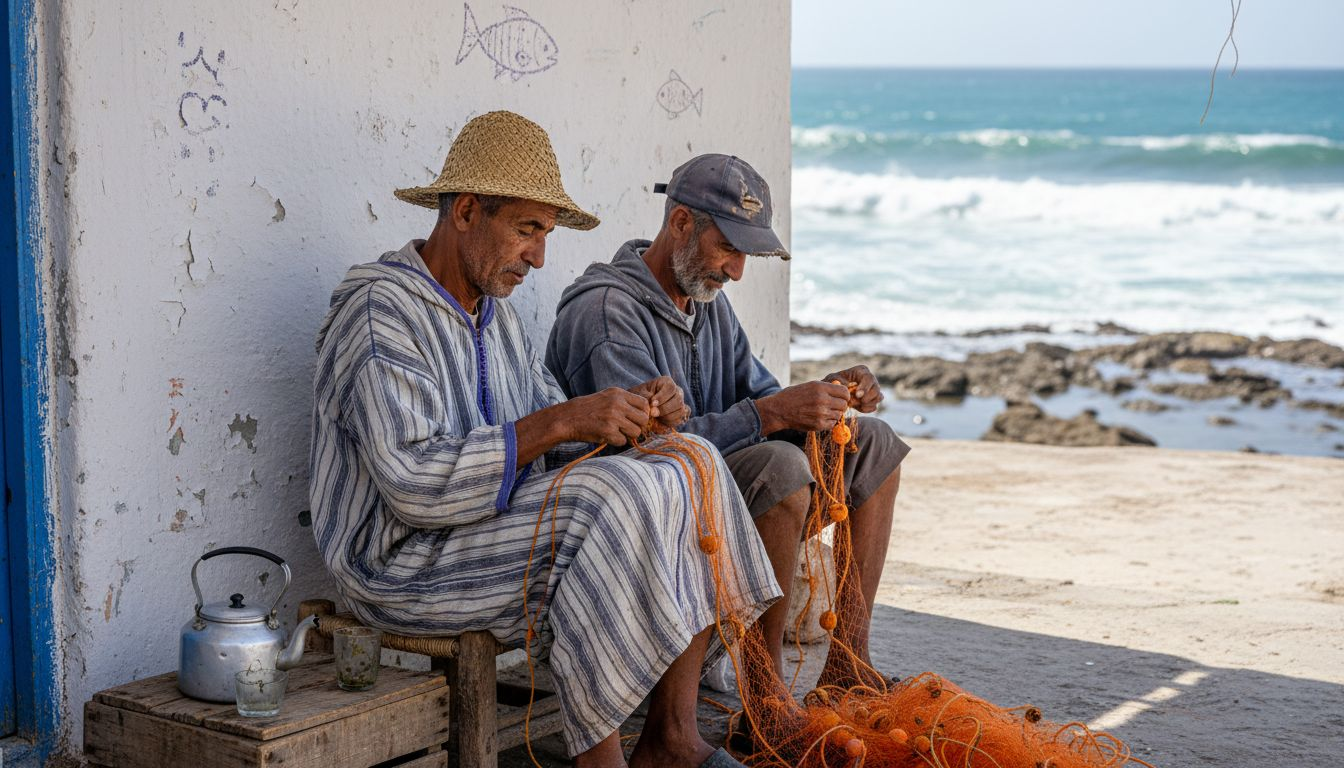
Moreover, ecotourism initiatives are emerging as critical mechanisms for preserving these fragile cultural landscapes. By creating economic opportunities that directly benefit local communities while protecting traditional practices, these programs offer sustainable approaches to cultural conservation. Coastal museums, guided heritage tours, and artisanal fishing demonstrations provide travelers with immersive experiences that go beyond typical tourist interactions, allowing deeper understanding of Morocco’s rich maritime heritage.
Pro tip: Engage with local fishermen and participate in community-led tours to gain authentic insights into Morocco’s maritime cultural traditions.
Luxury Stays, Wellness, and Boutique Hotels on the Coast
Morocco’s coastal luxury hospitality scene represents a sophisticated fusion of traditional charm and contemporary elegance, offering travelers extraordinary experiences that transcend conventional accommodations. Luxury beach hotels along the Atlantic coastline provide discerning guests with unparalleled comfort, world-class amenities, and immersive cultural experiences that celebrate Morocco’s rich hospitality traditions.
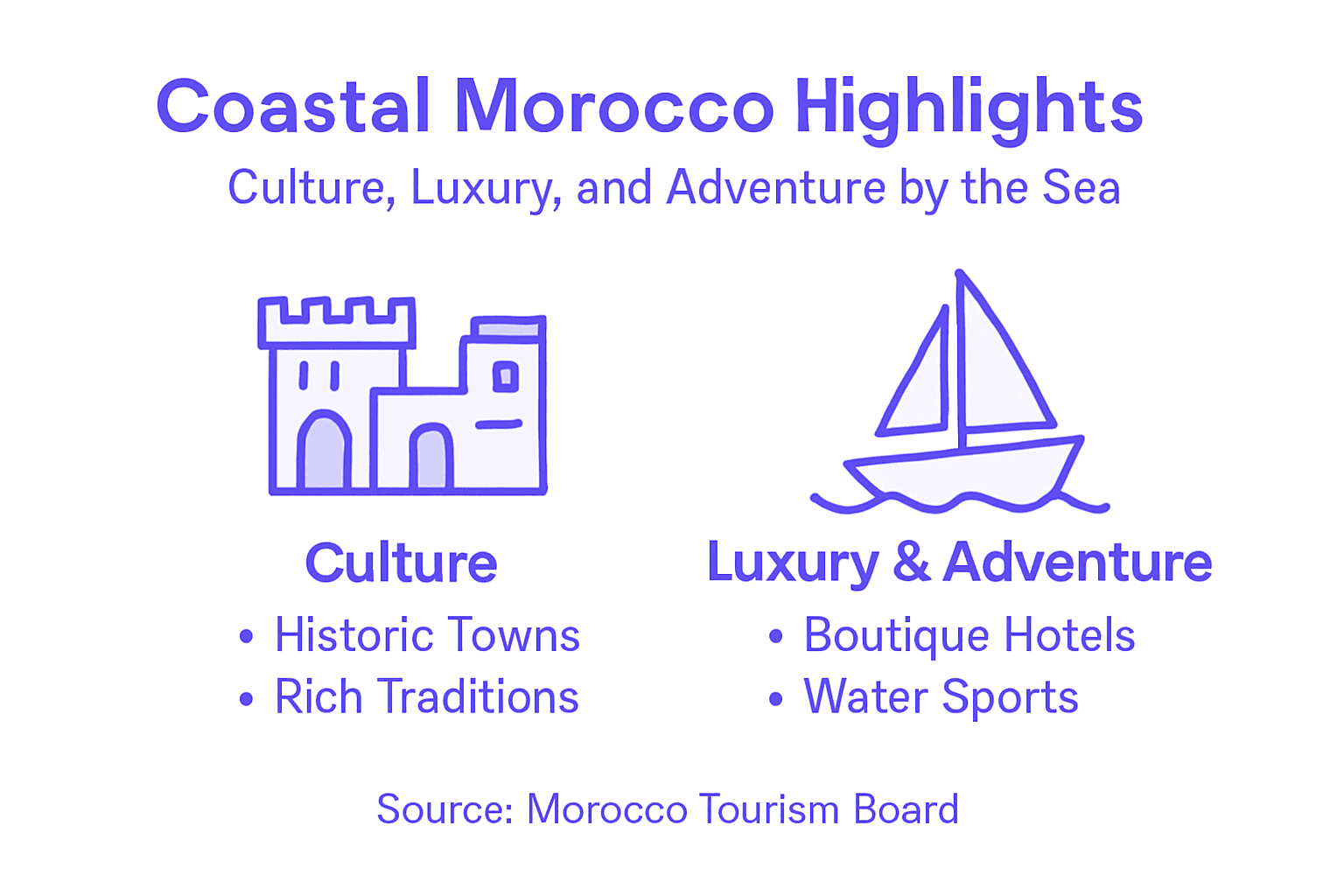
Boutique hotels and wellness retreats have emerged as distinctive highlights of Morocco’s coastal hospitality landscape. These intimate properties often feature architectural masterpieces that blend traditional Moroccan design elements like zellige tilework, intricate carved woodwork, and open courtyards with modern luxury amenities. Locations such as Essaouira and Agadir host remarkable properties that offer holistic wellness experiences, combining thalassotherapy treatments, traditional hammam rituals, and panoramic ocean views. Guests can indulge in spa treatments that integrate ancient Berber healing practices with contemporary wellness techniques, creating transformative relaxation experiences.
The most exceptional coastal hotels provide more than just accommodation – they offer curated experiences that connect travelers with local culture. From rooftop terraces overlooking the Atlantic to private beach access with personalized service, these properties understand the nuanced desires of luxury travelers. Gourmet restaurants featuring locally sourced seafood, cooking classes with traditional Moroccan chefs, and cultural immersion programs distinguish these properties from standard resort experiences. Each property tells a unique story, representing not just a place to stay, but a gateway to understanding Morocco’s rich coastal heritage.
Pro tip: Book boutique coastal hotels during shoulder seasons for better rates and more personalized experiences with fewer tourists.
Fresh Seafood, Dining, and Culinary Experiences
Morocco’s coastal cuisine represents a vibrant culinary landscape where fresh seafood takes center stage, transforming simple ingredients into extraordinary gastronomic experiences. Seafood supply and local fisheries reveal a rich ecosystem of marine species that form the backbone of coastal culinary traditions, with gilthead bream, sardines, and other Atlantic catches defining regional flavor profiles.
Coastal towns like Taghazout and Essaouira emerge as culinary destinations where seafood is more than sustenance – it’s a cultural expression. Fresh fish markets showcase an intricate dance of fishermen, local chefs, and food enthusiasts who transform daily catches into remarkable dishes. Traditional preparation methods emphasize simplicity: whole fish grilled over open flames, seasoned with local herbs like cumin, saffron, and preserved lemon, or incorporated into complex seafood tagines that blend Berber and Mediterranean influences.
The culinary experience extends beyond mere consumption, representing a profound connection between ocean, community, and tradition. Sophisticated restaurants and humble seaside cafes alike celebrate the ocean’s bounty, offering everything from refined seafood tasting menus to rustic grilled fish served with warm bread and vibrant salads. Each dish tells a story of maritime heritage, reflecting generations of coastal communities’ intimate relationship with the sea. Travelers can participate in cooking classes, visit local fish markets, and engage directly with fishermen to understand the nuanced art of Moroccan seafood preparation.
Pro tip: Visit local fish markets early in the morning to witness the freshest catches and learn authentic seafood selection techniques from local vendors.
Water Sports, Excursions, and Planning Tips
Morocco’s Atlantic coastline offers an extraordinary playground for water sports enthusiasts, adventure seekers, and travelers looking to explore dynamic marine environments. Coastal destinations like Taghazout, Essaouira, and Agadir have emerged as premier locations for surfing, kiteboarding, windsurfing, and stand-up paddleboarding, each offering unique conditions that cater to different skill levels and preferences.
Surfing remains the cornerstone of Morocco’s water sports culture, with world-renowned breaks that attract international athletes and passionate beginners alike. Taghazout, in particular, has transformed from a small fishing village to a global surfing destination, featuring consistent waves and multiple surf camps that provide professional instruction and equipment rentals. Beginners can find gentle beach breaks, while experienced surfers can challenge themselves with powerful right-hand point breaks that offer long, spectacular rides along the rugged coastline.
Beyond surfing, Morocco’s coastal regions provide a diverse range of marine experiences. Kayaking through coastal estuaries, sport fishing expeditions, whale watching tours, and sailing excursions offer travelers multiple ways to engage with the marine environment. Many local operators provide guided experiences that combine adventure with cultural insights, allowing visitors to understand the intricate relationship between coastal communities and the Atlantic Ocean. Safety, professional instruction, and high-quality equipment remain paramount, with numerous reputable schools and tour operators ensuring memorable and secure marine adventures.
Key types of water sports and their best locations:
| Water Sport | Top Location | Typical Conditions | Who Benefits Most |
|---|---|---|---|
| Surfing | Taghazout | Year-round waves | Beginners & experts |
| Windsurfing | Essaouira | Strong, steady winds | Wind lovers & athletes |
| Kayaking | Agadir | Calm estuaries, mild surf | Nature explorers |
| Sport Fishing | El Jadida | Deep-water Atlantic | Adventure anglers |
Pro tip: Book water sports experiences during shoulder seasons (April-May or September-October) for optimal wind conditions, fewer crowds, and more personalized instruction.
Discover the Perfect Blend of Culture, Luxury, and Adventure in Coastal Morocco
Are you ready to explore Morocco’s stunning coastline where vibrant culture meets luxurious comfort and thrilling adventure The article highlights the challenge travelers face in balancing authentic cultural experiences with indulgent stays and exciting activities The key goals include discovering unique beach towns, engaging with resilient maritime traditions, and enjoying world-class water sports while supporting sustainable tourism
Embrace the richness of Moroccan coastal life with expert guidance from Destinations – Flying Tajine and unlock unforgettable adventures through Adventure & Activities – Flying Tajine Whether you seek immersive cultural heritage or upscale boutique hotels our curated insights help you design the perfect journey tailored to your desires
Start planning your exceptional Moroccan coastal escape today by visiting Flying Tajine Discover practical Travel Tips – Flying Tajine to navigate your trip confidently and experience the extraordinary fusion of culture luxury and adventure that only Morocco offers The time to create lifelong memories is now act boldly and let Flying Tajine be your trusted travel companion
Frequently Asked Questions
What are the main attractions for travelers visiting Coastal Morocco?
Coastal Morocco offers stunning landscapes, vibrant cultures, and unique beach towns. Key attractions include surfing in Taghazout, exploring Essaouira’s historic medina, enjoying Agadir’s modern resorts, and experiencing local culinary delights.
How does Coastal Morocco blend culture and adventure for visitors?
Coastal Morocco provides opportunities for cultural immersion through its diverse traditions, cuisine, and architecture, while also offering adventure activities like surfing, kayaking, and fishing to engage with its dynamic marine environments.
What type of accommodations can visitors expect along the coast of Morocco?
Visitors can find a range of accommodations from luxury boutique hotels featuring traditional designs and wellness retreats to affordable seaside lodges that prioritize local experiences and sustainable tourism.
What kinds of culinary experiences are available in Coastal Morocco?
Coastal Morocco’s culinary scene centers around fresh seafood, with local fish markets and restaurants offering grilled fish, seafood tagines, and cooking classes that highlight traditional preparation methods and regional flavors.
Recommended
- Unique Luxury Accommodations in Morocco: A Journey Through the Exquisite Stay Options – Flying Tajine
- Top Luxury Desert Camps in Morocco: Experience the Ultimate Desert Adventure – Flying Tajine
- Morocco Glamping: High-End Camping in Breathtaking Settings – Flying Tajine
- Morocco’s Best 5-Star Hotels for a Luxury Getaway – Flying Tajine