

Over 17 million travelers are expected to explore Morocco in 2026, marking a massive shift in global tourism trends. Discerning American and European luxury travelers now look for more than just stunning hotels—they seek immersive cultural journeys with authentic local experiences. Morocco is investing heavily in world-class accommodations and unique cultural activities, making it a prime choice for those planning a transformative adventure full of comfort, tradition, and personal discovery.
Table of Contents
- Moroccan Travel In 2026: Core Trends
- High-End Stays And Authentic Experiences
- Iconic Destinations And Unique Itineraries
- Navigating Moroccan Culture And Customs
- Essential Safety, Logistics, And Travel Tips
Key Takeaways
| Point | Details |
|---|---|
| Tourism Growth | Morocco aims to attract over 17 million tourists by 2026, focusing on luxury, cultural, and adventure travel segments. |
| Cultural Experiences | Enhanced cultural and immersive experiences are prioritized, along with sustainable tourism development. |
| Luxury Accommodation | High-end stays will provide personalized and authentic cultural interactions, moving beyond traditional hospitality. |
| Safety and Preparation | Travelers should maintain awareness of safety protocols, prepare for potential risks, and have comprehensive travel plans. |
Moroccan Travel in 2026: Core Trends
Morocco is poised for a transformative tourism renaissance in 2026, with strategic plans targeting unprecedented growth and global positioning. The national tourism strategy aims to attract over 17 million tourists across diverse travel segments, positioning the country as a premier destination for luxury, cultural, and adventure experiences.
The upcoming tourism landscape reveals three core strategic pillars: enhanced cultural experiences, sustainable tourism development, and advanced hospitality infrastructure. Morocco’s government has meticulously designed a roadmap targeting nine specialized tourism sectors, including cultural circuits, desert adventures, and business tourism. These targeted approaches will significantly transform traveler experiences, offering more immersive and personalized journeys through Morocco’s rich cultural tapestry.
North American and European markets remain primary targets, with significant investment in air connectivity and hotel capacity. Cities like Marrakech and Casablanca are experiencing substantial infrastructure upgrades, creating world-class experiences that blend traditional Moroccan hospitality with modern luxury amenities. The national tourism strategy anticipates generating 120 billion dirhams in foreign exchange and creating approximately 200,000 new jobs by 2026.
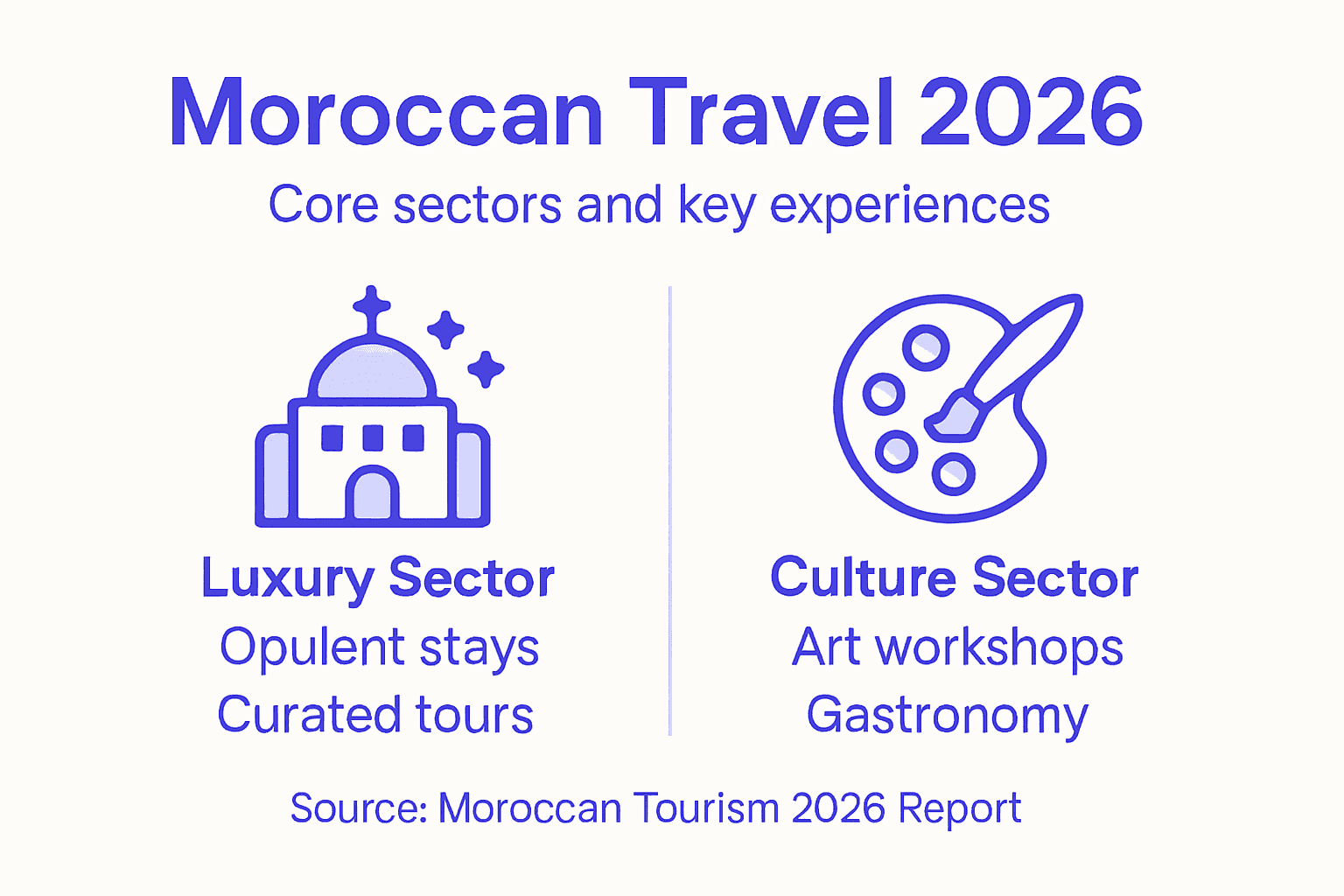
Here’s a summary of Morocco’s top tourism sectors for 2026 and their unique traveler appeal:
| Sector | Key Experience | Traveler Appeal |
|---|---|---|
| Cultural Circuits | Historic medinas and arts | Culture enthusiasts |
| Desert Adventures | Sahara camps, camel treks | Adventure seekers |
| Business Tourism | Modern conference facilities | Business travelers |
| Coastal Destinations | Surfing, oceanfront resorts | Leisure and water sports fans |
| Mountain Retreats | Berber villages and hikes | Nature lovers |
| Urban Luxury Stays | Restored riads, fine dining | High-end travelers |
| Artisan Workshops | Craft demos, local artists | Art and craft enthusiasts |
| Wellness Retreats | Hammam, spa traditions | Wellness-focused visitors |
| Traditional Villages | Local homestays, farm visits | Authentic experience seekers |
Pro tip: When planning your 2026 Moroccan adventure, book accommodations and experiences well in advance, as the country expects record tourism numbers and premier destinations will fill quickly.
High-End Stays and Authentic Experiences
Moroccan luxury travel in 2026 transcends traditional hospitality, offering immersive experiences that blend opulent comfort with deep cultural authenticity. Travelers seeking extraordinary journeys can now explore unique luxury accommodations that transform typical travel into profound cultural encounters. These extraordinary stays range from restored historic riads in Marrakech to exclusive desert camps in the Sahara, each providing an intimate window into Morocco’s rich heritage.
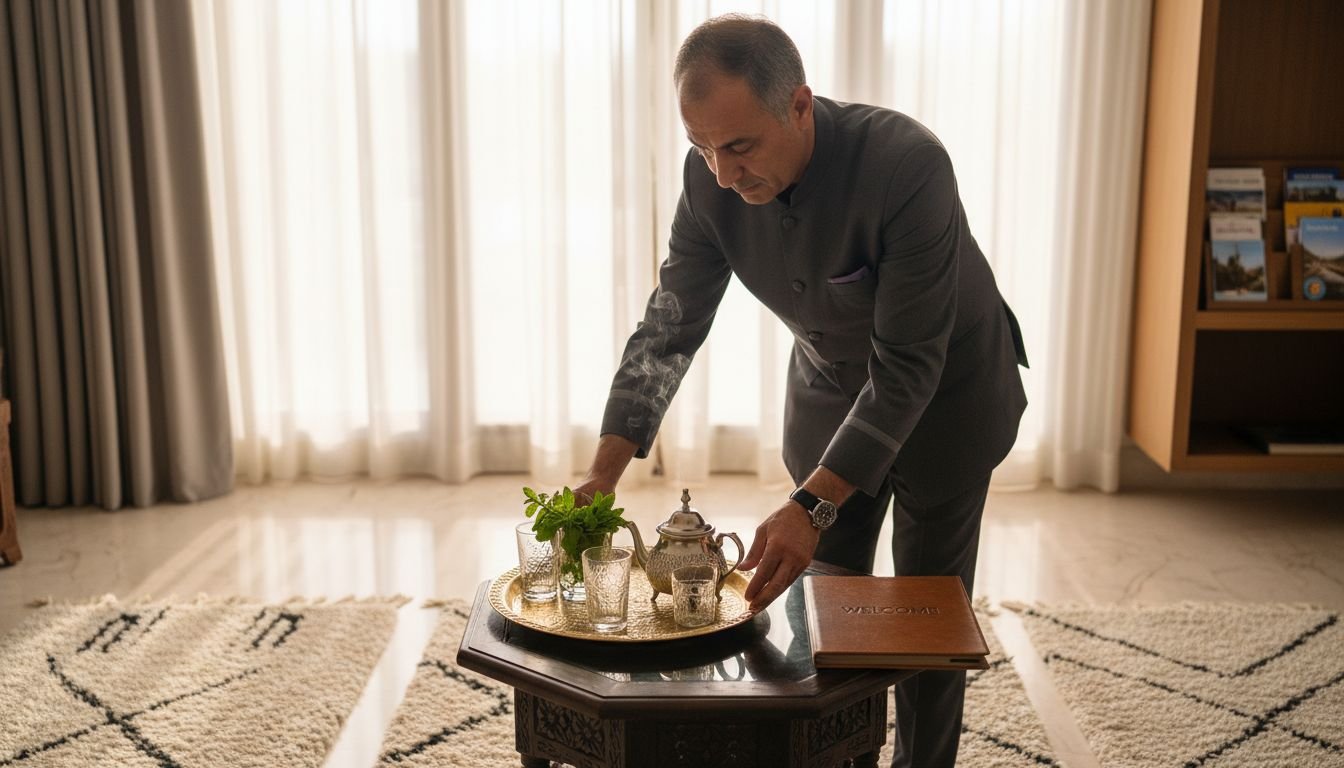
The landscape of high-end Moroccan accommodations has evolved dramatically, moving beyond mere lodging to curated experiences that connect guests directly with local traditions. Luxury travelers can now select from boutique guesthouses featuring intricate zellij tilework, palatial restored kasbahs with private courtyards, and eco-friendly mountain retreats that offer unprecedented access to Berber communities. These accommodations are meticulously designed to provide comfort while maintaining authentic architectural integrity and cultural significance.
Each luxury stay represents a carefully crafted narrative of Moroccan hospitality, integrating modern amenities with centuries-old design principles. Travelers can expect personalized experiences like private cooking classes with local chefs, exclusive guided tours through historic medinas, and wellness retreats that incorporate traditional Moroccan hammam treatments. These immersive experiences go far beyond conventional tourism, offering deep connections with local communities and traditions that transform a simple vacation into a meaningful cultural journey.
Pro tip: When booking luxury accommodations in Morocco, prioritize properties that offer personalized cultural experiences and demonstrate genuine community engagement over generic high-end amenities.
The following table highlights core differences between luxury and traditional Moroccan accommodations for travelers considering their options:
| Feature | Luxury Accommodation | Traditional Lodging |
|---|---|---|
| Comfort Level | Premium amenities, personalized care | Basic amenities, local charm |
| Architectural Style | Restored riads, designer details | Simple, authentic structures |
| Cultural Engagement | Private experiences and events | Daily local interactions |
| Guest Experience | Curated, immersive, exclusive | Shared, communal, informal |
Iconic Destinations and Unique Itineraries
Morocco’s 2026 travel landscape presents a meticulously crafted tapestry of destinations that cater to discerning travelers seeking transformative experiences. Carefully designed multi-day itineraries now offer immersive journeys spanning the country’s diverse regions, from the imperial northern cities to the mystical Saharan landscapes and vibrant coastal regions. These curated routes are strategically developed to provide travelers with comprehensive insights into Morocco’s rich cultural complexity.
Discerning travelers can select from a range of themed itineraries that go beyond traditional tourism models. Adventure seekers might explore the rugged Atlas Mountains, tracing ancient Berber trade routes and staying in remote mountain lodges. Cultural enthusiasts can delve into the intricate world of imperial cities like Fez and Marrakech, experiencing private tours of historic medinas, exclusive artisan workshops, and intimate encounters with local craftsmen. Coastal routes offer a different perspective, connecting travelers with surf destinations, traditional fishing villages, and luxurious oceanfront experiences that blend modern comfort with authentic maritime traditions.
The 2026 Moroccan travel experience is characterized by its nuanced approach to destination exploration. Itineraries are no longer just about seeing places, but about creating deep, meaningful connections with local communities. Travelers can expect carefully curated experiences that might include private cooking classes with local chefs, sunset camel treks in the Sahara, astronomical experiences in desert camps, and guided tours that reveal the intricate social and cultural fabric of Moroccan society. Each journey is designed to offer an unprecedented level of cultural immersion and personal transformation.
Pro tip: Select itineraries that offer flexible, small-group experiences with local guides who provide genuine cultural insights rather than standardized tourist routes.
Navigating Moroccan Culture and Customs
Understanding Morocco’s intricate social landscape requires more than superficial knowledge. Travelers who want to truly connect with local communities must develop a nuanced appreciation for the country’s complex cultural dynamics. Experiencing Morocco’s vibrant culture demands respect, curiosity, and an open mindset that goes beyond typical tourist interactions.
Moroccan social etiquette is deeply rooted in Islamic traditions, tribal customs, and a profound sense of hospitality that shapes every interaction. Communication follows intricate unwritten rules that emphasize respect, indirect communication, and maintaining social harmony. Greetings are elaborate and meaningful, often involving multiple steps and genuine interest in the other person’s well-being. Visitors should understand that personal questions about family and health are not invasive but represent genuine care and social connection. Religious and cultural sensitivities play a crucial role, with dress, behavior, and interaction protocols varying significantly between urban and rural environments.
Navigating cultural nuances requires strategic preparation and genuine respect. This includes understanding appropriate dress codes, which vary dramatically between cosmopolitan cities like Casablanca and traditional rural regions. Modest clothing that covers shoulders and knees is recommended, particularly for women traveling in more conservative areas. Language engagement is equally important – while many Moroccans speak French and increasingly English, learning basic Arabic or Berber phrases demonstrates profound cultural respect. Nonverbal communication, such as hand gestures, personal space considerations, and dining etiquette, are equally critical in building meaningful connections with local communities.
Pro tip: Always approach cultural interactions with genuine curiosity and humility, recognizing that your role is to learn and appreciate rather than judge or compare.
Essential Safety, Logistics, and Travel Tips
Navigating Morocco’s travel landscape requires strategic preparation and heightened awareness. Travelers must understand safety protocols that extend beyond typical tourist considerations. Comprehensive travel planning involves understanding potential risks, implementing preventive strategies, and maintaining situational awareness throughout your journey.
Security considerations in Morocco demand a nuanced approach, particularly in urban environments and tourist-dense areas. Petty crime remains a potential concern, with pickpocketing and opportunistic scams targeting distracted travelers. Strategic precautions include maintaining low-profile personal accessories, using secure money belts, and avoiding ostentatious displays of wealth. Travelers should prioritize staying in well-reviewed accommodations with robust security measures, particularly in major cities like Casablanca and Marrakech. Communication preparedness is crucial – having local emergency contact numbers, understanding basic Arabic phrases, and maintaining digital copies of important documents can significantly mitigate potential risks.
Logistical planning represents another critical dimension of Moroccan travel in 2026. Comprehensive preparation includes understanding local transportation networks, obtaining appropriate travel insurance, and developing flexible itineraries that account for potential disruptions. Recommended strategies involve pre-arranging airport transfers, selecting accommodations in secure neighborhoods, and maintaining consistent communication with trusted local contacts. Technology can be an essential travel companion, with offline maps, translation apps, and virtual private network (VPN) services providing additional layers of security and convenience.
Pro tip: Always maintain digital and physical copies of critical documents, and share your detailed itinerary with a trusted contact outside of Morocco.
Unlock the Full Luxury Moroccan Experience with FlyingTajine.com
Planning a transformative and immersive luxury journey to Morocco in 2026 means navigating the complex blend of cultural authenticity, personalized high-end stays, and meaningful local connections described in the article. The challenge is to find trusted resources that guide you through Morocco’s nuanced social customs, curated luxury accommodations, and uniquely crafted itineraries that go beyond the ordinary. FlyingTajine.com is designed exactly for this purpose. Whether you are seeking expert Travel Tips to navigate cultural etiquette or want to dive into immersive Cuisine & Culture experiences, our site offers detailed insights tailored for the discerning traveler.
Begin your luxury Moroccan adventure today with comprehensive guides and exclusive recommendations only at FlyingTajine.com. Don’t wait to secure your place in Morocco’s premier destinations as 2026 promises record tourism growth and uniquely immersive journeys. Explore expert advice, curated luxury stays, and authentic cultural experiences that bring your travel dreams to life with confidence and ease.
Frequently Asked Questions
What are the core trends in Moroccan luxury travel for 2026?
The core trends in Moroccan luxury travel for 2026 include enhanced cultural experiences, sustainable tourism development, and advanced hospitality infrastructure. This aims to offer travelers immersive and personalized experiences that connect them with Morocco’s rich heritage.
How can travelers find authentic experiences while staying in luxury accommodations in Morocco?
Travelers can find authentic experiences in luxury accommodations by choosing properties that offer personalized cultural engagement, such as private cooking classes, exclusive guided tours, and wellness retreats that incorporate traditional Moroccan practices.
What types of itineraries are available for tourists looking to explore Morocco in 2026?
Curated itineraries for 2026 feature thematic journeys, including desert adventures in the Sahara, cultural explorations in imperial cities, and coastal experiences. These itineraries emphasize immersive connections with local communities and authentic cultural encounters.
What cultural customs should travelers be aware of when visiting Morocco?
Travelers should be aware of Moroccan social etiquette, which includes modest dress, respectful communication, and understanding local customs. Engaging with locals using basic language skills and observing cultural norms can enhance the travel experience.